

A power station is a big rechargeable battery with outlets. It can run a camp fridge, charge laptops off-grid or keep essentials running during an outage. Here’s how to pick the right size, and the models we recommend.
HannahRev is reader-supported. When you buy through our links we may earn a commission, at no extra cost to you. Our picks are based on published specifications, hands-on reviews from trusted testers and owner feedback.
Our picks at a glance
| Product | Best for | Price | Capacity | AC output | Weight |
|---|---|---|---|---|---|
| Jackery Explorer 2000 v2 | Best for off-grid camping | $1,499 | 2,042 Wh | 2,200 W | 38.9 lb |
| EcoFlow DELTA Pro 3 | Best for home backup | $3,699 | 4,096 Wh | 4,000 W | 114.1 lb |
| Anker SOLIX C1000 Gen 2 | Best value | $799 | 1,056 Wh | 1,800 W | 25.2 lb |
| Jackery Explorer 300 | Best for phones and laptops | $289 | 293 Wh | 300 W | 7.1 lb |
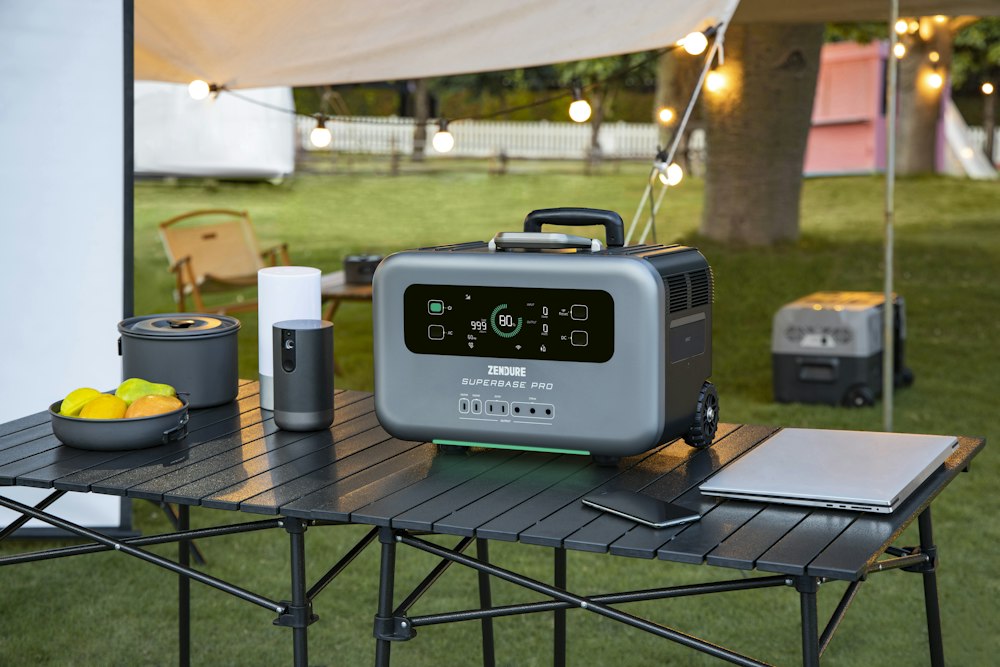
1. Jackery Explorer 2000 v2 — Best for off-grid camping
Plenty of capacity for a long weekend with a fridge, lights and devices. It also has enough output to run a kettle or induction burner.
Specs: Capacity: 2,042 Wh · AC output: 2,200 W · Weight: 38.9 lb · List price: $1,499
Pros:
- Long runtimes
- Runs high-draw appliances
Cons:
- Heavy at about 39 lb
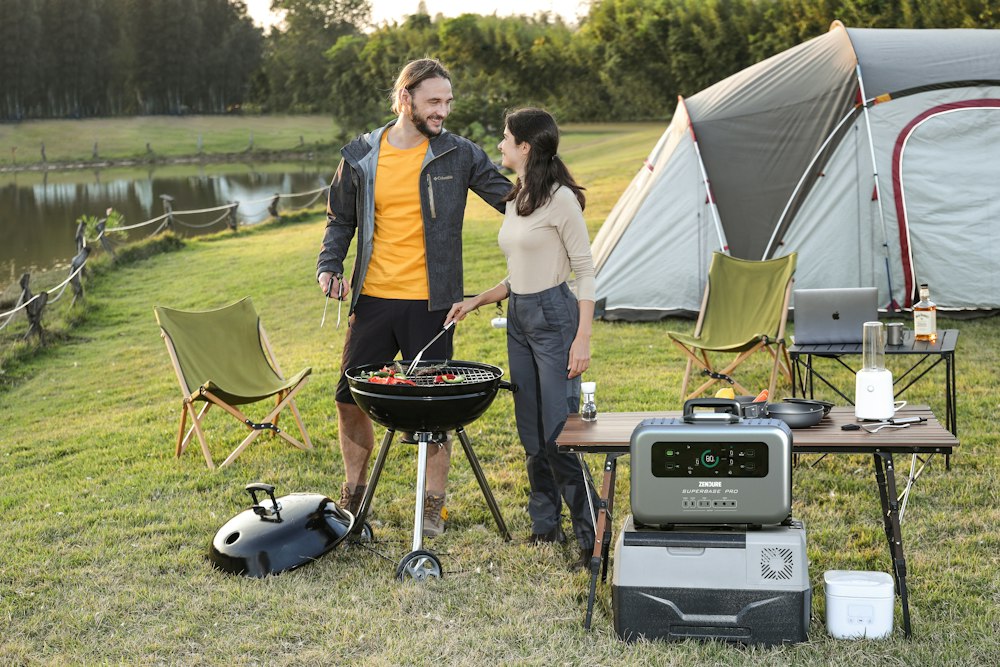
2. EcoFlow DELTA Pro 3 — Best for home backup
Closer to a home battery than a camping gadget. It can keep critical circuits running through a long outage.
Specs: Capacity: 4,096 Wh · AC output: 4,000 W · Weight: 114.1 lb · List price: $3,699
Pros:
- Huge capacity
- Expands up to 48 kWh
Cons:
- Extremely heavy
- Expensive
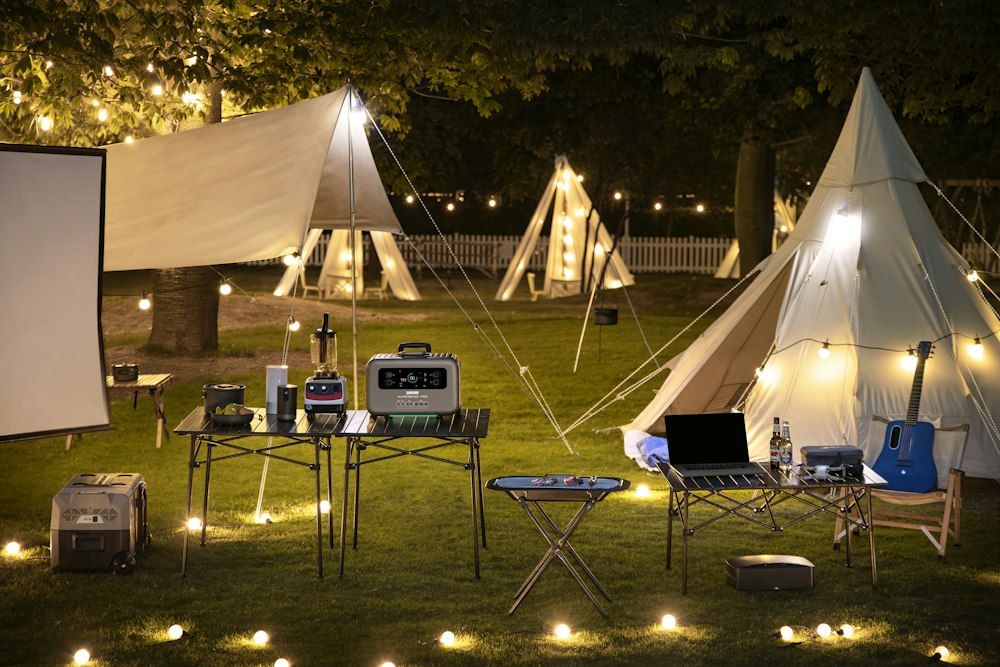
3. Anker SOLIX C1000 Gen 2 — Best value
The right size for most people: enough for a weekend of camping or an evening blackout, and light enough to carry.
Specs: Capacity: 1,056 Wh · AC output: 1,800 W · Weight: 25.2 lb · List price: $799
Pros:
- Compact for its capacity
- Very fast recharge
Cons:
- Noisy fan
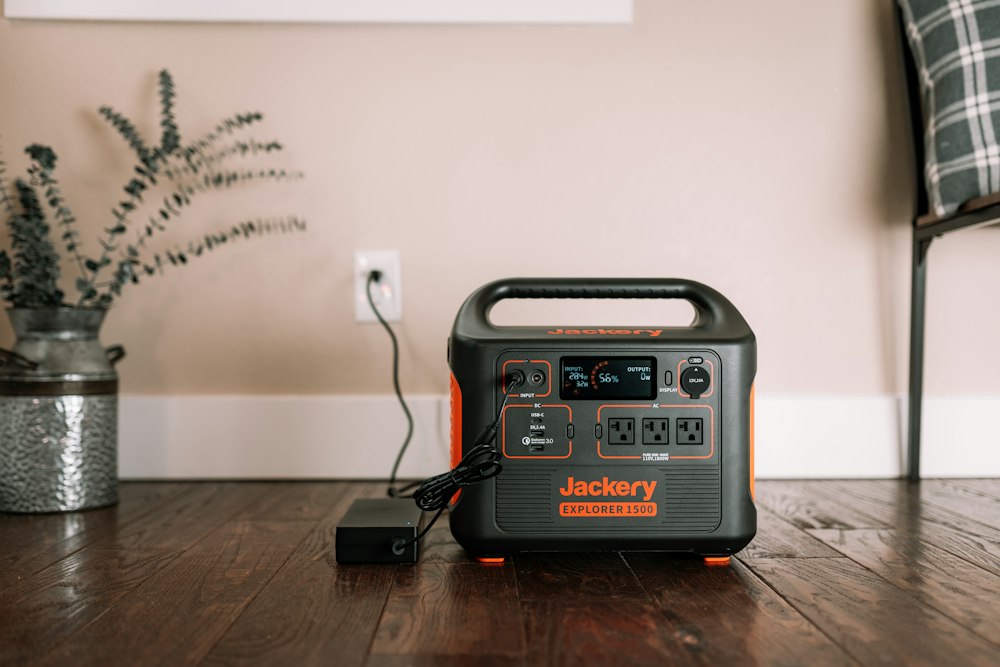
4. Jackery Explorer 300 — Best for phones and laptops
A lunchbox-size battery for keeping phones, cameras and a laptop charged at camp.
Specs: Capacity: 293 Wh · AC output: 300 W · Weight: 7.1 lb · List price: $289
Pros:
- Light and portable
- Great for devices
Cons:
- Only for low-wattage gear
How to choose portable power stations
Capacity (Wh)
Add up what you’ll power. A 50 W laptop for 10 hours needs about 500 Wh. Expect about 80–85% of the rated capacity in real use.
Output (W)
Small units (300–500 W) charge phones and laptops. Around 1,500 W runs a coffee maker or electric cooler. 3,000 W+ is for tools and home backup.
Battery chemistry
LiFePO4 batteries last thousands of cycles and are ideal for frequent use in vans and RVs. NMC is lighter but wears out sooner.
Solar charging
A useful rule of thumb is about 200 W of panels for every 1,000 Wh of battery, with 4–6 good sun hours a day.
FAQ
Can a power station run a fridge?
Yes. A 12V camp fridge uses roughly 40–60 W while running, so a 1,000 Wh unit can handle about a day or more.
Is a power station the same as a generator?
No. It’s a silent, fume-free battery, safe to use indoors. You recharge it rather than refuel it.
Leave a Reply