
Reader-supported: we may earn a commission when you buy through our links. Learn more

Category: Home Office & Tech

  • Home Wi-Fi Router Guide: Buying Smart and Locking It Down

    Home Wi-Fi Router Guide: Buying Smart and Locking It Down

    Key takeaways

    • Choose a router that supports WPA3 (or at least WPA2) and automatic firmware updates.
    • On day one: change the admin password, turn on the firewall, and turn off remote management, WPS and UPnP.
    • Use the FCC broadband label to compare plans on price, speeds and data limits.

    What to look for in a router

    • WPA3 Personal encryption support; WPA2 Personal is the minimum the FTC recommends.[1]
    • Automatic updates. CISA says products should have automatic updates turned on by default, and to ask the provider why if they don’t.[2]
    • A guest network feature, so visitors can stay off your main network.[1]
    • The option to run a separate network for devices like security cameras.[3]
    • A built-in firewall you can switch on.[1]

    The day-one settings

    1. 1Change the router’s default admin password to something unique, not your name, address or the router brand.[1]
    2. 2Set a separate, strong Wi-Fi password and choose WPA3 or WPA2 encryption.[1]
    3. 3Turn off remote management, WPS and UPnP, and turn on the firewall.[1]
    4. 4Register the router with the manufacturer or turn on automatic updates; check the maker’s site for firmware updates.[1,2]
    5. 5Log out of the admin page when you are done.[1]

    Cameras, speakers and other smart devices

    For home security cameras, the FTC suggests choosing models that encrypt account data, livestreams and stored video. Use a unique, complex password for each account, turn on two-factor authentication and keep the software updated. You can also put cameras on a separate network.[3]

    For voice assistants, the FTC recommends long passphrases (15+ characters), multi-factor authentication, auto-deleting recordings and a PIN for voice purchases. It also notes that a more secure router makes every connected device more secure.[4]

    Reading the broadband label

    Internet providers must show an FCC broadband label, modeled on a nutrition label, wherever a plan is sold, online and in stores. It lists the monthly price, any introductory rate, data allowances and typical speeds, with links to the provider’s network-management and privacy policies.[5]

    Router lock-down

    • WPA3 (or WPA2) encryption on
    • Unique admin password, separate Wi-Fi password
    • Firewall on; remote management, WPS and UPnP off
    • Automatic updates on
    • Guest network for visitors; separate network for cameras if you can

    Sources

    Every figure in this guide comes from the official sources below. We summarize them in our own words; check the source for the full guidance.

    1. 1How To Secure Your Home Wi-Fi NetworkFederal Trade Commission
    2. 2Update SoftwareCybersecurity and Infrastructure Security Agency
    3. 3How To Secure Your Home Security CamerasFederal Trade Commission
    4. 4How To Secure Your Voice Assistant and Protect Your PrivacyFederal Trade Commission
    5. 5Broadband Consumer LabelsFederal Communications Commission

    This guide is general consumer information, not medical, legal or professional advice. Always follow the manufacturer’s instructions for your product. See our editorial policy and affiliate disclosure.

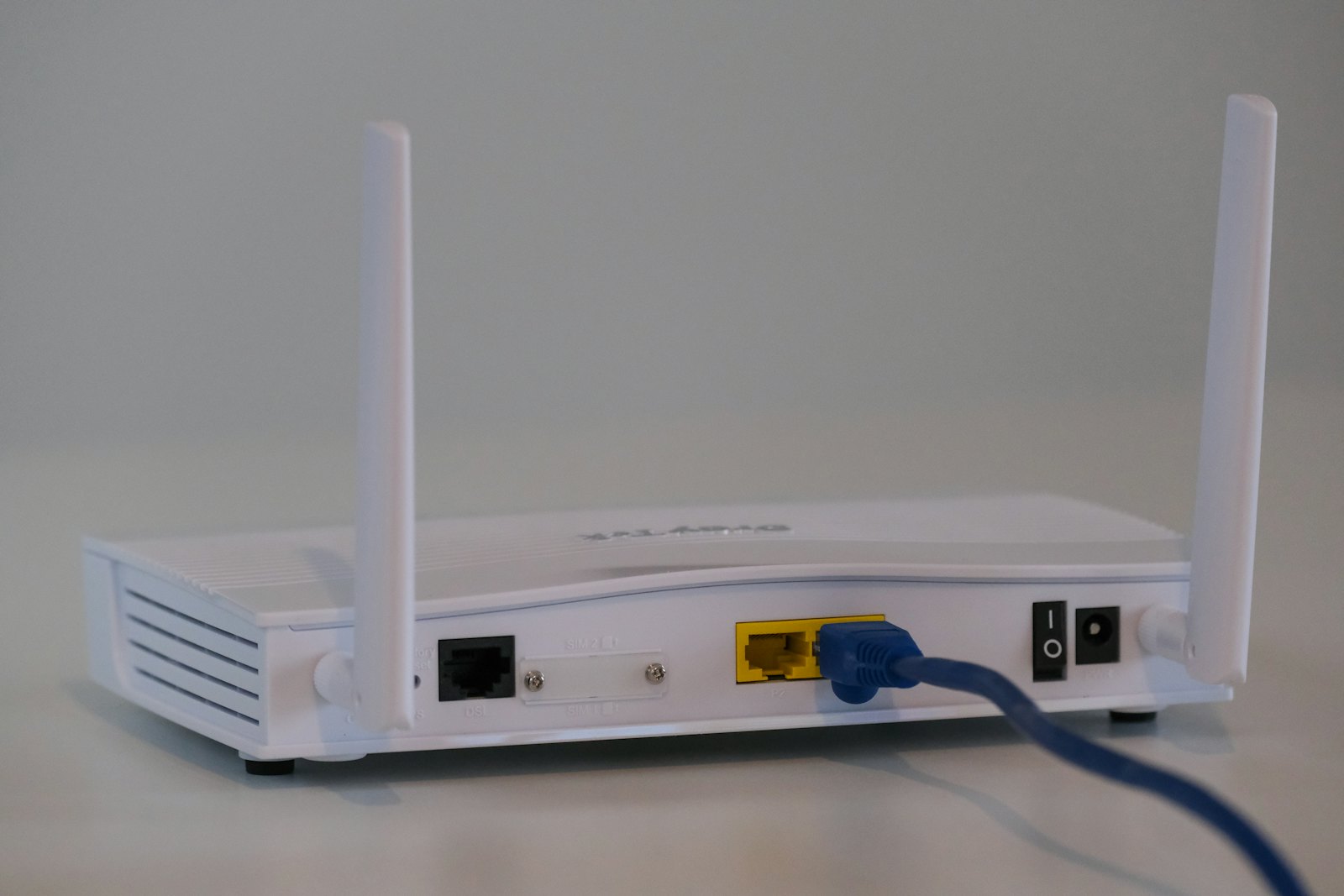
    Photo: Compare Fibre on Unsplash
  • The Home Office Monitor Setup Guide: Height, Distance and Glare

    The Home Office Monitor Setup Guide: Height, Distance and Glare

    Key takeaways

    • Sit roughly an arm’s length away: OSHA’s preferred range is 20 to 40 inches from eye to screen.
    • Put the top of the screen at or slightly below eye level, and the monitor straight in front of you.
    • A monitor arm or height-adjustable stand usually improves comfort more than a bigger screen.

    Start with distance and height

    Most discomfort at a home desk comes from a screen that is too close, too low or off to one side. Before you shop, fix the geometry of the desk you already have. It costs nothing and tells you what you actually need.

    20–40 in

    Preferred eye-to-screen distance[1]

    15–20°

    Center of screen below horizontal eye level[1]

    ≤ 35°

    Maximum turn left or right of straight ahead[1]

    OSHA’s computer workstation guidance puts the preferred viewing distance at 20 to 40 inches, measured from your eyes to the front of the screen. The top line of text should sit at or slightly below eye level, so that the center of the screen lands about 15 to 20 degrees below your straight-ahead gaze.[1]

    Keep the monitor directly in front of you. OSHA advises against placing it more than 35 degrees to the left or right, because constant head turning adds up over a workday.[1]

    Tame glare before it tames you

    Tilt the screen so it is roughly perpendicular to your line of sight, usually no more than 10 to 20 degrees back. Tilting it further tends to catch ceiling lights, which is when people start squinting or leaning forward.[1]

    • Place the desk so windows are to your side rather than directly behind or in front of the screen.
    • If overhead light still reflects, OSHA notes that a glare screen may be needed.[1]
    • A matte (anti-glare) panel finish also cuts reflections in bright rooms.
    • Glossy panels look punchy in a dark room but show more reflections in a bright one; match the finish to your room.

    Desk and leg room

    OSHA notes that leg clearance under a desk should generally be 20 to 28 inches high. If your desk cannot be adjusted, the usual fix is to raise the chair and add a footrest; a height-adjustable desk solves both at once.[2]

    What to look for when you shop

    Monitor features that affect comfort
    Feature Why it matters Look for
    Height-adjustable stand Lets you hit the at-or-below-eye-level target Enough travel to reach your eye height, or VESA mount support
    Tilt and swivel Keeps the screen perpendicular to your gaze Tilt range that covers 10–20° back
    VESA mount holes Lets you add a monitor arm later 75×75 or 100×100 mm pattern
    Screen finish Controls reflections in bright rooms Matte for sunny rooms; glossy for dim rooms
    Size vs. distance Too big for your desk depth means turning your head Choose a size you can see without head turns at 20–40 in

    Resolution, refresh rate and HDR are worth comparing too, but they matter most once the basics above are right. A modest monitor at the correct height usually beats an expensive one perched on a stack of books.

    Two-minute desk check

    • Eyes 20–40 in from the screen
    • Top of screen at or just below eye level
    • Screen straight ahead, not off to the side
    • No ceiling-light reflections on the panel
    • Feet flat, thighs roughly level, 20–28 in of leg clearance

    Sources

    Every figure in this guide comes from the official sources below. We summarize them in our own words; check the source for the full guidance.

    1. 1Computer Workstations eTool: MonitorsOSHA, U.S. Department of Labor
    2. 2Computer Workstations eTool: DesksOSHA, U.S. Department of Labor

    This guide is general consumer information, not medical, legal or professional advice. Always follow the manufacturer’s instructions for your product. See our editorial policy and affiliate disclosure.

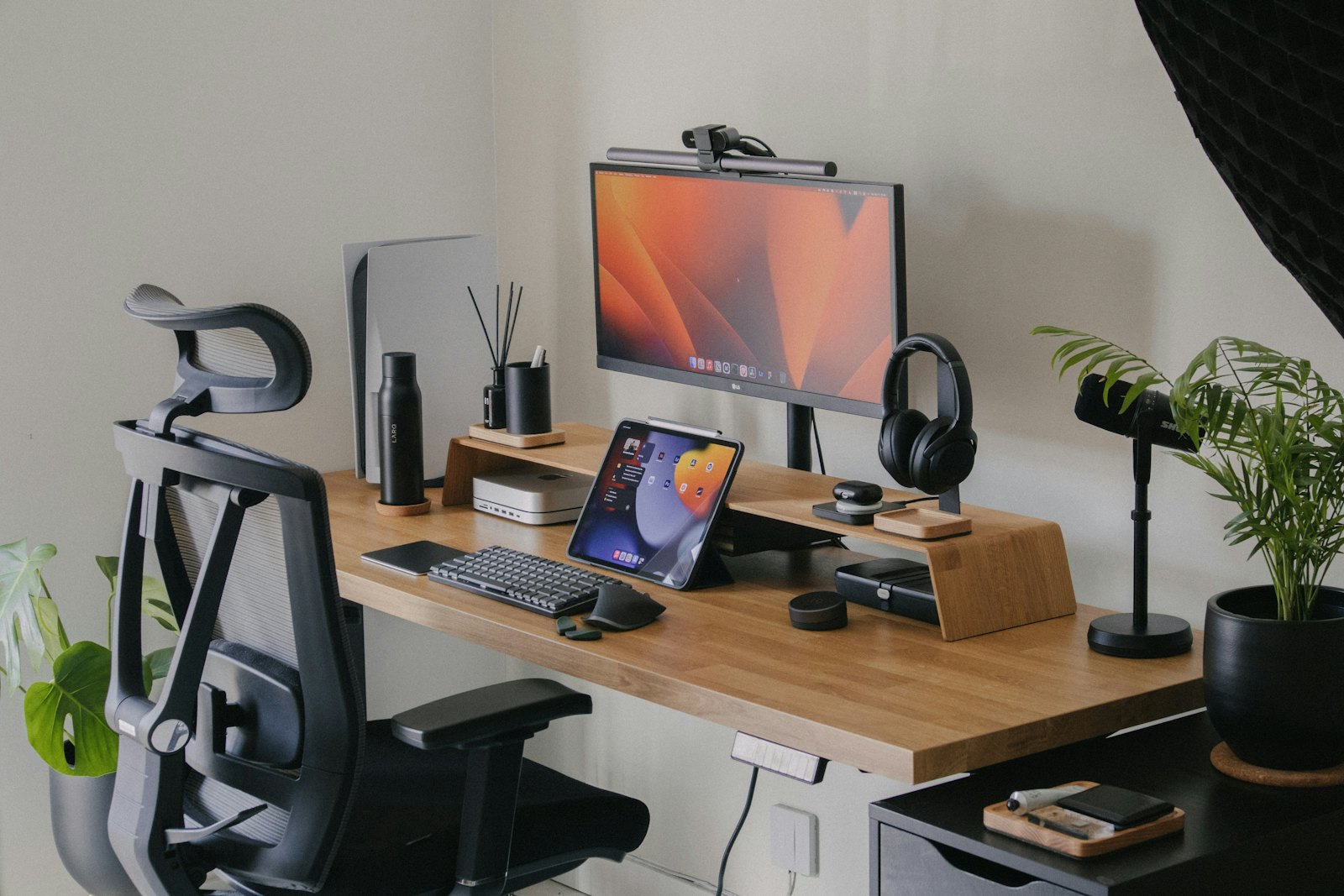
    Photo: Nubelson Fernandes on Unsplash