Reader-supported: we may earn a commission when you buy through our links. Learn more

Category: Outdoor & Camping

  • The Best Trekking Poles of 2026

    The Best Trekking Poles of 2026

    Poles save your knees on descents, help you balance across creeks and turn steep climbs into a four-wheel-drive affair. Here are our favorites for backpacking, trail running and hikers on a budget.

    HannahRev is reader-supported. When you buy through our links we may earn a commission, at no extra cost to you. Our picks are based on published specifications, hands-on reviews from trusted testers and owner feedback.

    Our picks at a glance

    Product Best for Price Weight (pair) Material Style Length
    MSR DynaLock Ascent Carbon Best overall $190 15.7 oz Carbon Folding + adjustable 14.5–47.5 in
    Black Diamond Trail Back Best value $100 18.3 oz Aluminum Telescoping 25–55.5 in
    Leki Cressida FX Carbon Best women’s pole $230 16.4 oz Carbon Folding + adjustable 16.5–47.8 in
    Black Diamond Distance Carbon Z Best for trail running $220 8.7 oz Carbon Fixed-length folding Fixed (sizes to 42.5 in)
    Trekology Trek-Z 2.0 Best budget pole $56 19.1 oz Aluminum Folding + adjustable 14.75–47.3 in
    MSR DynaLock Ascent Carbon

    1. MSR DynaLock Ascent Carbon — Best overall

    A folding pole with real length adjustment and a sturdy metal lock. It handles everything from day hikes to long trips.

    Specs: Weight (pair): 15.7 oz · Material: Carbon · Style: Folding + adjustable · Length: 14.5–47.5 in · List price: $190

    Pros:

    • Comfortable grips
    • Packs small
    • Light swing weight

    Cons:

    • Pricey
    • Not the lightest
    Black Diamond Trail Back

    2. Black Diamond Trail Back — Best value

    A simple, tough aluminum pole at a fair price. It’s a great first pair for backpackers who will lean hard on them.

    Specs: Weight (pair): 18.3 oz · Material: Aluminum · Style: Telescoping · Length: 25–55.5 in · List price: $100

    Pros:

    • Durable aluminum
    • Handles heavy packs
    • Wide length range

    Cons:

    • Heavy
    • Long when collapsed
    Leki Cressida FX Carbon

    3. Leki Cressida FX Carbon — Best women’s pole

    Designed around women’s hand sizes and heights. The cork grips are some of the most comfortable you’ll find.

    Specs: Weight (pair): 16.4 oz · Material: Carbon · Style: Folding + adjustable · Length: 16.5–47.8 in · List price: $230

    Pros:

    • Ergonomic cork grips sized for smaller hands
    • Versatile folding design
    • Premium finish

    Cons:

    • Expensive
    • Carbon is less forgiving than aluminum
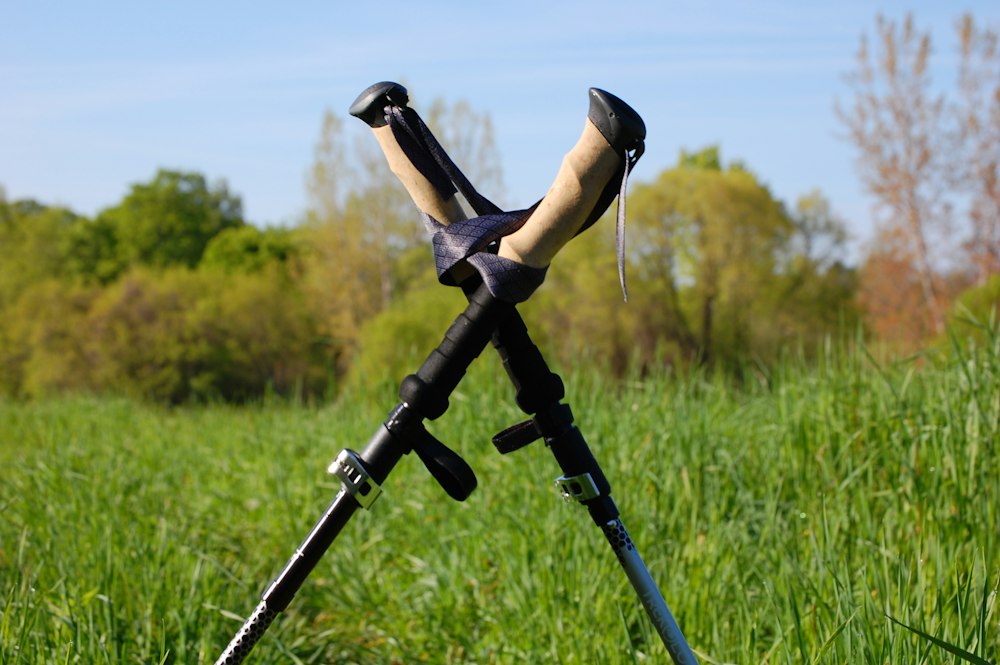
    Black Diamond Distance Carbon Z

    4. Black Diamond Distance Carbon Z — Best for trail running

    Under 9 oz a pair. Runners and fastpackers love how quickly they snap together and stow away.

    Specs: Weight (pair): 8.7 oz · Material: Carbon · Style: Fixed-length folding · Length: Fixed (sizes to 42.5 in) · List price: $220

    Pros:

    • Extremely light
    • Folds tiny for running vests
    • Efficient push

    Cons:

    • No length adjustment
    • Thinner grips
    Trekology Trek-Z 2.0

    5. Trekology Trek-Z 2.0 — Best budget pole

    A folding aluminum pole that performs well above its price. It’s a smart pick for occasional hikers and travelers.

    Specs: Weight (pair): 19.1 oz · Material: Aluminum · Style: Folding + adjustable · Length: 14.75–47.3 in · List price: $56

    Pros:

    • Low price
    • Durable
    • Folds compact

    Cons:

    • Not ultralight
    • Limited adjustment

    How to choose trekking poles

    Folding vs. telescoping

    Folding (Z-style) poles pack shortest and suit runners and travelers. Telescoping poles adjust over a wider range and are generally tougher.

    Carbon vs. aluminum

    Carbon is lighter and damps vibration, but can snap if it’s bent hard. Aluminum bends before breaking, which makes it the safer choice for heavy loads.

    Locks

    Lever locks are easy to adjust with gloves on. Check that they can be tightened without tools.

    Grips

    Cork molds to your hand and handles sweat. Foam is lighter and softer. Extended grips let you choke down on steep traverses.

    FAQ

    How long should trekking poles be?

    With the tip on the ground, your elbow should bend about 90°. Shorten them for climbs and lengthen them for descents.

    One pole or two?

    Two poles give balanced support and are best for backpacking. One pole is fine for casual walks.
  • The Family Day-Hike and Camping Gear Checklist

    The Family Day-Hike and Camping Gear Checklist

    Key takeaways

    • Pack the NPS Ten Essentials on every hike, even a short one.
    • In the mountains, plan to be off exposed terrain before early-afternoon thunderstorms.
    • Children under 13 must wear a USCG-approved life jacket while a boat is underway, under federal law (state rules may differ).

    The Ten Essentials

    The National Park Service’s Ten Essentials[1]
    Essential What to pack
    Navigation Map, compass, GPS
    Sun protection Sunglasses, sunscreen, hat
    Insulation Jacket, hat, gloves, rain shell, extra layers
    Illumination Flashlight or headlamp
    First aid First-aid supplies
    Fire Matches or lighter and fire starters
    Repair kit and tools Duct tape, knife, multi-tool, scissors
    Nutrition Extra food
    Hydration Water and a way to treat more
    Emergency shelter Tent, space blanket, tarp or bivy

    The NPS suggests packing an extra layer for the worst conditions you could meet, and bright clothing so you are easier to spot. Long sleeves and pants cut sun exposure too. In heat, drink often, before you feel thirsty.[1]

    Weather: plan around lightning

    The National Weather Service is blunt: the only fully safe place in a thunderstorm is inside a building or a vehicle. Tents and picnic shelters do not protect you. Mountain storms often build in the early afternoon, so start early and plan to be down from exposed areas by around noon. A portable NOAA Weather Radio helps.[2]

    Ticks and mosquitoes

    • Use an EPA-registered repellent with DEET, picaridin, IR3535, oil of lemon eucalyptus, PMD or 2-undecanone; look for the EPA registration number on the label.[3]
    • Using sunscreen as well? Put the sunscreen on first.[3]
    • Treat clothing and gear with 0.5% permethrin, or buy pre-treated gear.[3]
    • After the hike: check bodies and pets, shower within two hours, and tumble-dry dry clothes on high heat for 10 minutes (longer if damp).[3]

    On the water: life jackets that fit

    Federal law requires children under 13 to wear a U.S. Coast Guard-approved life jacket while a recreational boat is underway, with limited exceptions such as being below deck or in an enclosed cabin; state rules may differ.[4]

    Children’s life jacket sizes (USCG)[4]
    Size Weight range
    Infant Up to 33 lb
    Child 33–55 lb
    Youth 55–88 lb

    A foam jacket should fit snugly and not ride up over the chin or ears. Test foam jackets for buoyancy every year and replace any that are waterlogged or damaged.[4]

    Grab-and-go pack

    • Map and compass or GPS
    • Sunscreen, hats, sunglasses
    • Rain shell and an extra warm layer per person
    • Headlamp, first-aid kit, fire starter, multi-tool
    • Extra food and water plus treatment
    • Emergency blanket
    • EPA-registered insect repellent
    • USCG-approved life jackets that fit, for any boating

    Sources

    Every figure in this guide comes from the official sources below. We summarize them in our own words; check the source for the full guidance.

    1. 1The Ten EssentialsNational Park Service
    2. 2Lightning Safety for Hikers and CampersNational Weather Service (NOAA)
    3. 3Preventing Tick BitesCenters for Disease Control and Prevention
    4. 4Life Jacket WearU.S. Coast Guard Boating Safety

    This guide is general consumer information, not medical, legal or professional advice. Always follow the manufacturer’s instructions for your product. See our editorial policy and affiliate disclosure.

    Photo: Dave Hoefler on Unsplash